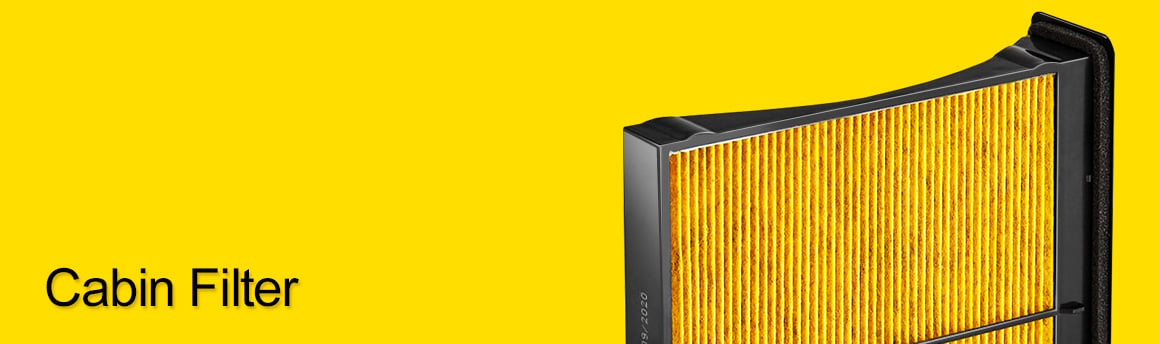
Cabin air filters are the unsung heroes of your vehicle.
Enjoying a pleasant atmosphere during your drive probably isn’t at the top of your priority list when you think about car maintenance. In fact, most people don't even know air filters exist. That is, until the uncomfortable musty smell starts to set in for you and your passengers.
Your cabin air filter helps keep the air inside your vehicle free of dust, pollen and other pollutants that can be unpleasant or dangerous to ingest. But like any filter in your car, by doing their job well, they get dirty. When a filter gets clogged, environmental contaminants sneak through and can cause discomfort or worse health issues. Not to mention that a dirty or clogged filter can impact the air conditioning unit's efficiency if left unattended.
This article takes the mystery out of cabin filters and does all the hard work for you. Read on to understand how they work, signs of damage and much much more.
What are car cabin filters?
As previously stated, your cabin air filter's sole function is to remove airborne particles, pollutants and microorganisms that can cause damage to your health. When your filter is working properly you and your passengers are free to breathe fresh air and enjoy a pleasant journey - this is even more important for drivers or passengers with allergies or asthma.
Cabin air filters also keep your AV system working efficiently. If your filter becomes clogged, the airflow system becomes ineffectual, and the affected components have to work harder but strain on them, causing premature wear.
How do cabin filters work?
Cabin air filters are usually small pleated units. The filtration material is mounted on a frame and placed within the ventilation system to filter the air. It works by drawing in the unclean surrounding air and passing it through its filter medium, which has fine openings. The unwanted particles become trapped inside the filter medium and separated from the clean, passing air.
Apart from through an open window or door, all air enters your vehicle through what’s called a HVAC (Heating ventilation and air conditioning) system. The cabin air filter purifies the air supply before going through your heating and cooling system to ensure passenger comfort.
Manufacturers often make cabin air filters out of engineered material, paper or multi fiber cotton.
The two main types of cabin filters are:
- Particle cabin filters: these prevent small particles from entering the vehicle, trapping particles as small as 0.3 microns
- Activated carbon cabin filters: These filters, like the particle cabin filters, can trap particles as tiny as 0.3microns. However, it has an additional layer of activated charcoal that prevents harmful gases and odours from entering the car.
A cabin air filter's function is to ensure your vehicle is safe and comfortable for all passengers. The filter captures airborne contaminants and improves air quality within your cabin. When your filters eventually become clogged with dirt or other pollutants, you will need to have them repaired or replaced. Of course, you often need a few tell-tale signs to know when to get yours inspected and serviced.
- Poor airflow from the vents: When the air filters become clogged with pollutants, it makes it much harder for the air to pass through. The restricted airflow for the air conditioning system leads to the vents blowing air with less force and adding extra stress on the system.
- Unusual odour from the vents: If you can smell a continued dusty or musty smell, you likely need to replace your filter as you are smelling the dirt stuck in your air filter. If left, this smell will only intensify, making it unpleasant to be in the cabin.
- Loud fan noises: When you turn on your AC system, if the cabin filter works correctly, you should only hear a soft noise. However, when large particles develop and get stuck in the air cabin filter, they cause much noise when air passes through them. If left, the noise will only grow louder over time.
- Foggy windows: Your filter retains a good level of airflow in the cabin and helps clear fog or ice that may form on the windows. If the air filter fails, it can't circulate air efficiently, making removing condensation from your windows challenging.
You should generally replace most cabin air filters between 25,000 and 50,000 miles. Sadly there is no warning light when your air filter needs to be changed. Each manufacturer has its own recommendation, so we recommend reviewing your specific owner's manual to provide insight into what it needs. There are also a few tell-tale signs that can notice:
- Foggy windows or reduced air circulation inside your cabin
- Musty or dirty odour
- Loud fan noises
- Poor airflow from your vents
Suppose you don't clean out your vehicle's air filters regularly. In that case, they will get dirty and clog up, reducing the airflow through them and causing your vehicle's heating/cooling system to operate less efficiently. As a result, the air entering your passenger compartment will be constantly recirculated, leading to an unpleasant odour.
The owner's service manual will verify that you have a cabin air filter and where to locate it. The manual may refer to this filter as a "micro cabin air filter", “air conditioning", or a "dust filter." To change your cabin filter, you will need to:
- Open the glove box and remove the limiting stop arm. You can remove it by sliding it away from the pin
- Remove the glove box to expose the faceplate and the cabin air filter
- Remove the dirty cabin air filter by sliding out the latches on the faceplate slides.
- Make sure you clean the chamber thoroughly before you put in a new air filter. Simply vacuum it and use a damp cloth.
- Once you've placed the filter, change the faceplate, and put the glove box and limiting stop back in place.
The short answer is yes.
Your air conditioning unit is affected by a failing cabin air filter. When the air filter is clogged, you will notice:
- The AC starts to fume dusty, dirty or musty smells.
- Experience a change in air conditioning quality. For example, it will blow off warm air during an intensely hot day.
- The AC will struggle to clear your fogged or icy windows
- Poor airflow from your vents
When the air filters clog with pollutants and other contaminants, it makes it much harder for the air to pass through, reducing airflow. The air filter has to work harder to circulate air and will place extra stress on the vehicle's AC system. This increases energy consumption and can lead to the eventual damage of the motor due to the overload.
The short answer is that it depends on your particular air filter.
Manufacturers usually make cabin air filters out of cloth, carbon or paper. Naturally, the paper filters should always be replaced and never cleaned. On the other hand, some cloth and carbon filters are reusable and remain undamaged from being washed.
Your owner's service manual will verify that you have a cabin air filter and where to locate it. However, even if you can wash your car cabin filter, there is a limit on the number of times you can clean a reusable filter. If it starts to develop holes or looks ragged, you'll need to buy a new one.
If you want to wash your cabin filter and have the right type, fill a container with soapy water, submerge, and use light pressure for at least 10 minutes. We recommend you direct the water from the clean to the dirty side. It would be best if you only reinstalled it when it is completely dry. Otherwise, it can become mouldy.